
Parish History
HISTORY OF ST. JOSEPH PARISH
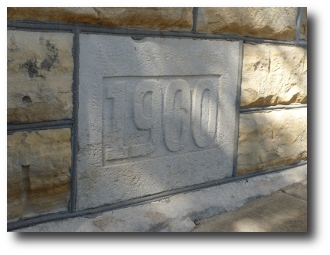
Residents of Ellinwood, Kansas, in the early 1870's were aspiring, courageous, honorable, thrifty people. Many of the German residents were devout Catholics. From 1865 to 1870 Father Boniface, a Benedictine monk from the newly founded St. Benedict's Abbey in Atchison was probably the first priest to celebrate Mass in Barton County. On June 4, 1875 the first Mass in Ellinwood settlement was celebrated in a building located on the corner of Main St. And “A” Street. Later Masses were celebrated in the homes of the settlers. In 1876 the Ellinwood Catholics organized a parish and began building a Church and dedicated it to the patronage of St. Joseph. In 1877 Father Michael Emmer came to Ellinwood as the first resident priest and served until 1878; he also served as pastor for the mission of Sts. Peter and Paul, located north of the city. The first Catholic cemetery of the area was located north of Ellinwood at the mission of Sts. Peter and Paul. Also in 1877 the Altar Sodality was formed to tend physical needs of the Church. Catherine Schwartz was the first to be baptized at St. Joseph on December 23, 1877. On October 31, 1878 the first marriage was performed, that of Catherine Sauer and Carl Burg. In the year 1879, the Ellinwood population was 1,817. As the city grew, the parish membership increased, also. The first Rectory was built in 1879. In 1885 St. Joseph School was built and classes were taught. The present church building was built in 1900. The cost was $22,204.00, which would measure 128 feet by 50 feet, with a steeple 150 feet high. Native limestone was appropriately selected as the building material. The church was built in gothic style. The interior, finished in white and gold, provided a tranquil setting for those who would worship there. The windows were of stained glass, and the ornate wooden altars had been hand carved by blind people. The pews provided a seating capacity for four hundred fifty people. The towering steeple, a landmark of the area, featured an $800 clock with four dials--one for each compass point. The mechanism provided the ringing of the bells on the quarter hours. The three melodious church bells were named after the three Archangels and were duly christened in May of 1902. The large bell - christened Michael, the middle bell - christened Gabriel, and the small bell - christened Raphael. The steam heating system allowed winter comfort. In 1903 the Dominican Sisters began teaching in St. Joseph's School and in 1907 a new rectory was built. Between December 5, 1915, and March 5, 1916, the church interior was redecorated. A series of paintings over the arches of the ceiling depicted the following events in the life of Christ and Mary: Agony in Gethsemane, Assumption, Heart of Jesus and Mary, Annunciation, Visitation, Crucifixion, Ascension of Christ, Christ blessing the Children, Sermon on the Mount, and Christ's Birth. In the sanctuary there are murals on the north and south walls. The most expensive are the murals in the choir loft of King David singing the Psalms, and St. Cecelia, the patroness of church music. In 1926, the St. Joseph Church had reached the age of fifty years--a significant achievement for the Catholic community. By 1926 the present school was built and dedicated and the parish numbered 400 persons. In the fall of 1937, a convenient approach and new steps were built at the entrance to St. Joseph's Church, and Gothic electric lamps, posts, and metal hand railings were installed. A Sacrarium was installed in the north sacristy, and a vestment case was built. Storage cabinets were built in the south sacristy. In 1941 the present rectory was constructed. The Sorrowful Mother grotto was completed by Tony Christoph in 1942. In 1945, cushioned kneelers were purchased for the church, as was tile flooring. That same year some improvememnts were made in the Catholic cemetery when the north part was filled and leveled. The Ellinwood District Hospital, under the direction of the Sisters of St. Joseph, opened October 19, 1952. On September 1, 1953, the clock on the steeple of the St. Joseph church was electrified. The new clock, which would now be entirely automatic and driven by eight electric motors, provided the continuation of a bell system which was very familiar to the townspeople. Electronically operated carillon chimes replaced the church’s electrical bell system in 1974. The Legion of Mary, an association for Catholics was started in Ellinwood in 1958. In November of 1965, in accordance with revised liturgy, a new portable wooden altar was placed in the sanctuary, which allowed the priest to pray the Mass while facing the congregation of worshipers. The altar was later removed; and in 1968 the sanctuary was remodeled. The marble altar which had been placed in the church in 1947 was repositioned into the middle of the sanctuary. During the bicentennial year of the United States of America, 1976, the St. Joseph's parish reached the age of one hundred years. A century of growth had seen the congregation of a few German-speaking immigrants rise to a church membership of 376 families (1,429 people) from various backgrounds. In 1981, the St. Joseph's Church members, as well as other parish families of the Dodge City Diocese entered into the renew program. The program was designed as a three year plan for promoting spiritual growth of the people through prayer and the sharing of faith. In 1984 St. Joseph's Parish Center was built and dedicated. In 1992 the new parish garage was built. So in 2010, the St. Joseph's Church of Ellinwood can boast a record of growth that has spanned one hundred thirty four years.